
Claude Code Leaked Again... UGH! Here’s What Actually Matters for Your Enterprise
If you’re running Claude Code in your environment, you need to pay attention to what happened last week, Action Items for Short and Long term. / 15 April DC Chapter zoom session/ and Innovator Alley!

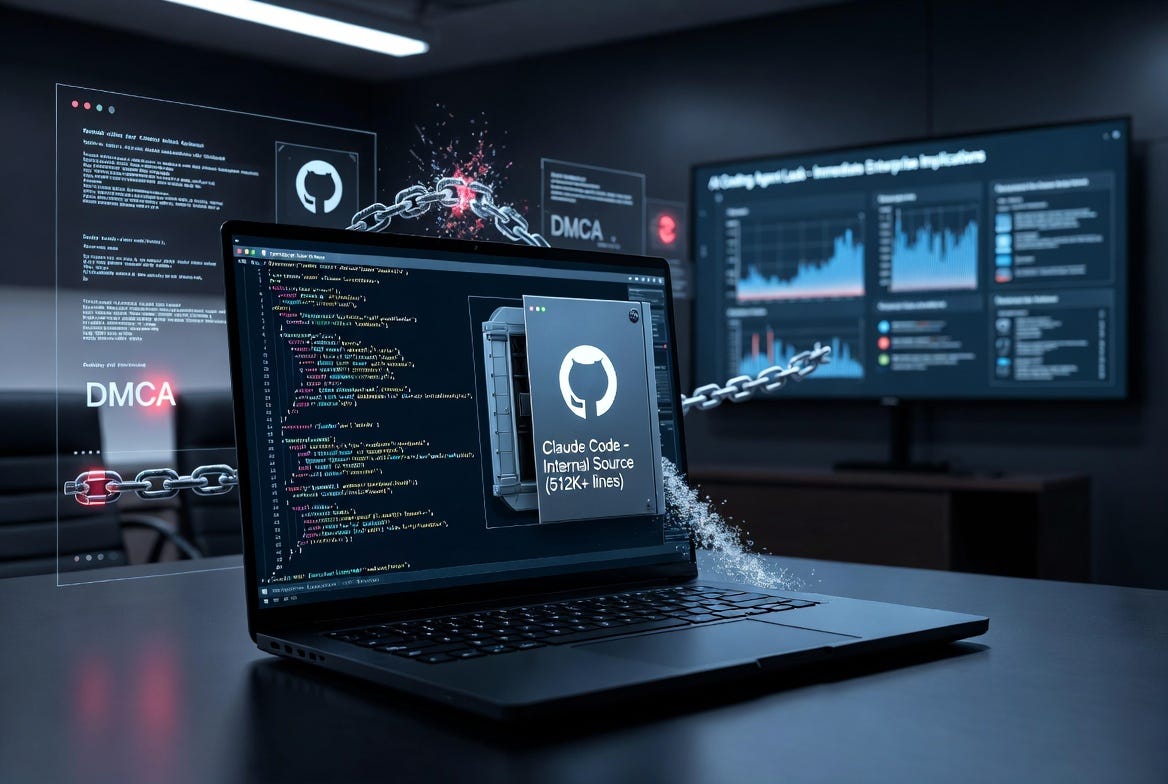
If you’re running Claude Code in your environment, you need to pay attention to what happened last week. Not because the sky is falling, but because this leak reveals exactly how immature the security model is around AI coding agents—and why our governance frameworks aren’t ready for what’s coming next.
The Incident (In Plain English)
On March 31st, Anthropic pushed an update to Claude Code that included a 60MB source map file. That’s half a million lines of internal TypeScript code, accidentally bundled into the public npm package. This isn’t the first time—they did the exact same thing thirteen months ago. Same mistake, different release. That should tell you something about their packaging controls.
The code was live for about three hours before they pulled it, but in the security world, that’s an eternity.
Why This Isn’t Just “Source Code Drama”
Most of the chatter online focuses on the intellectual property angle or the “vibe coding” implications. But as security leaders, we care about what this exposes operationally.
Researchers at Adversa AI found a live vulnerability in the permission system while reviewing the leaked code. Here’s the mechanics: Claude Code uses a graph-based permission engine that evaluates command chains. If you feed it a compound command with more than 50 subcommands, the complexity threshold trips a failsafe—but not the one you’d want. Instead of blocking the operation, it downgrades to a simple user prompt. So an attacker crafts a malicious repo with a deeply nested command structure, the security control fails open, and your developer gets a casual “Allow this?” dialog that looks routine but is actually exfiltrating data.
That’s not a theoretical concern. Zscaler already found threat actors hosting fake “Claude Code leak” repositories packed with Vidar infostealer. They know developers are searching for this code, so they’re serving malware disguised as the leak itself. Classic supply chain exploitation, but targeting your AI tooling directly.
The Governance Problem Nobody’s Talking About
Buried in that leaked code were references to two upcoming features that should make every CISO’s stomach turn:
First, there’s something called KAIROS—essentially a persistent daemon mode where Claude Code runs continuously in the background, processes GitHub webhooks automatically, and sends push notifications to your phone when it completes tasks. Think about that: an AI agent with write access to your codebase, operating asynchronously without human initiation, running on your developers’ laptops. We’re barely managing interactive AI copilots; now we’re talking about autonomous background processes with repository access?
Second—and this one is legally messier—there’s an “Undercover Mode” feature. From what the code shows, this strips the AI attribution markers from generated code so commits appear human-authored. No “generated by Claude” comments, no audit trail. Just clean code that looks like your developer wrote it. If you’re in a regulated industry, or dealing with open-source license compliance, or just trying to maintain code provenance for security investigations, this breaks your chain of custody in ways that existing tools can’t detect.
What You Should Do This Week
I’m not going to give you a generic checklist, but here are the moves that actually matter right now:
Priority Action (Immediate):
Check if anyone on your team installed Claude Code between March 31st, 00:21 and 03:29 UTC. If they did, treat that endpoint as potentially compromised and rotate every secret that machine could touch. Threat actors seeded malicious packages during the window when developers were frantically searching for leak details. Don’t trust those installations.
This Sprint:
Stop using npm to install Claude Code. Use Anthropic’s native installer instead.The npm supply chain is the attack vector here. Every dependency is a potential injection point.
This Quarter:
Update your AI tooling policy to explicitly address “autonomous background modes” and AI-generated code attribution. If KAIROS launches as described, you need to decide now whether you’re comfortable with unsupervised AI agents committing code while your developers sleep. And your legal team needs to weigh in on that attribution stripping feature before it lands in production.
Ongoing:
Audit your endpoint detection. Most EDR platforms can’t distinguish between legitimate AI coding agents and malware with similar behavioral patterns.These tools operate with high privilege, access credentials, and blend into developer workflows. If you can’t see it, you can’t govern it.
The Bottom Line
Look, source code leaks happen. They’re embarrassing, but usually manageable. What makes this different is the combination of factors: these AI coding agents have enormous privilege, they’re being adopted faster than we can secure them, and the vendors are clearly moving toward more autonomous functionality without asking enterprise security what we think about it first.
Anthropic’s response so far has been the standard “we’ve removed the file and are reviewing our processes” line. But twice in thirteen months suggests a process gap, not a one-off mistake. As CISOs, we can’t control their packaging hygiene, but we can control whether we’re blindly adopting tools that are about to get significantly more autonomous—and significantly more risky—without proper guardrails.
The “vibe coding” enthusiasts will tell you this is the future and resistance is futile. My job is to make sure that future doesn’t bypass our security controls entirely.
As you may know, I’m Director of the DC Metro Chapter (free to join for cyber and AI leadership) at:
https://www.cyberbreakfastclub.com/join-today.
Please join our next DC Chapter event 15 April, 745-9am EDT via zoom. I hope you will consider joining your local chapter (14 chapters in the US); and we always welcome you in the DC Chapter.
15 April. Our Topic will be ‘Board-Ready Cyber Governance: Metrics, Alignment, and Executive Authority.’
SPEAKER
Ann Marie van den Hurk, MSc., APR - Founder at Mind The Gap Advisory
https://www.linkedin.com/in/annmarievandenhurk/
ABSTRACT
Cyber leaders are judged by how well governance translates to action and continuity under pressure.
Ann Marie will share a practical framework that turns governance inputs into board-aligned outcomes, backed by real case examples and measurable metrics.
Participants will leave with executable models for board reporting, executive decision alignment, and strategic incident governance.
Audience attendees will come away with:
1) A governance scorecard tailored for board consumption
2) A decision alignment process model between security and business leadership
3) Communication frameworks that protect reputation and operational authority during crisis.
Innovator Alley:
*We don’t give recommendations lightly, but these two stand out, (as of April 2026).
We have a new member for the DC Chapter and one that is worth a discovery call and a demo. We have reviewed countless AI Security “solutions” and point solutions and Neurosec is quite unique. (Just walk the floor at RSA, Billington or BlackHat and you will be inundated).
However, what impressed us about Neurosec was the team: They bring cyber and AI knowledge and hands on keyboard experience from CapitalOne, Booz Allen Hamilton, US Federal Government cyber teams, Mastercard, and many, many more.
NeuroSec (https://www.neurosec.ai/)
Seizing the AI Security Opportunity: “AI-SPM”
AI adoption is surging, but security is lagging behind.
Unmet Need: 97% of enterprises require AI security.
High Stakes: Shadow AI breaches cost $670K more than standard, and regulatory pressure (EU AI Act, individual US states, etc.) is imminent.
Market Validation: Major recent acquisitions confirm AI-SPM as the next essential security layer, but a unified platform gap still remains.
First-Mover Advantage: NeuroSec aims to define the category with comprehensive coverage, compliance automation, and enterprise focus.

Reach out to us if you would like to learn more.
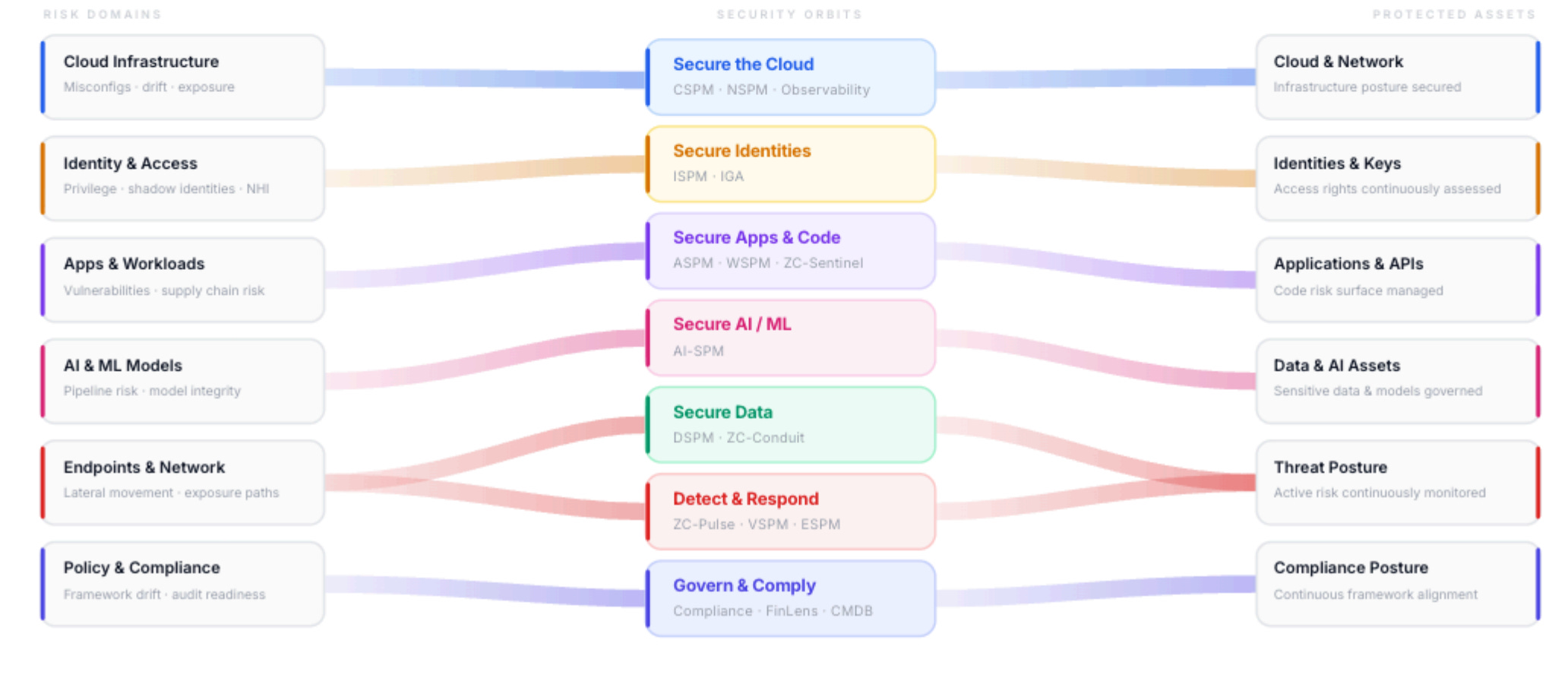
We have another new member for the DC Chapter as Zeroception offers a unified “X-SPM” (Extended Security Posture Management) platform that consolidates multiple security disciplines-
CSPM (Cloud Security Posture Management),
ISPM (Identity Security Posture Management),
ASPM (Application Security Posture Management),
VSPM (Vulnerability Security Posture Management),
and NSPM (Network Security Posture Management).
All rolled into a single control plane with real-time visibility and adaptive defense capabilities.
**However, you don’t need to purchase ALL of their offerings; maybe all you need is CSPM- perfectly fine. We are just highlighting what they are capable of performing for you. *
So why this matters for you.
Tool Consolidation Opportunity - Rather than managing five to seven separate point solutions (each with their own agents, dashboards, and policy engines), Zeroception provides unified coverage across cloud, identity, application, vulnerability, and network layers. For those drowning in security tool sprawl, this represents potential operational efficiency gains and reduced integration debt.
Zero Trust Architecture Alignment - The platform is explicitly built around Zero Trust principles with continuous risk assessment, least-privilege enforcement, and real-time monitoring across hybrid and multi-cloud environments (AWS, Azure, GCP)
Edge Security & Traffic Intelligence - Their “Unified Edge Security Overview” provides real-time visibility into request volumes, geographic distribution, response codes, and access patterns across all protected services from a single control plane- critical for organizations with distributed global infrastructure .

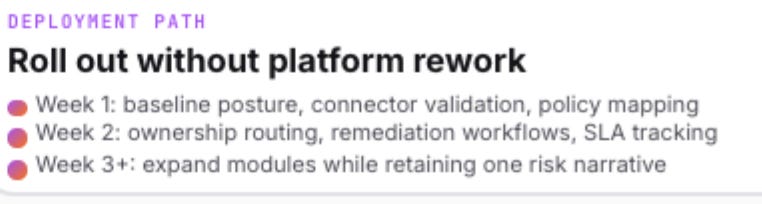
Reach out to us if you would like to learn more about these two unique firms.. We’re quite impressed but you be the judge.
again, please save the date & join us on 15 April, 745-9am EDT via zoom.
Always here to support you. anytime, daniel.haney@cyberbuyer.io
